
POTS, Salt and Electrolytes: How to Tell If Yours Are Doing Anything
You bought the electrolyte powder everyone in the POTS groups recommended. You're drinking it. And you still feel like you're standing on the deck of a boat by 11am. Before you assume it isn't working for you, it's worth checking what's actually in the sachet, because a lot of drinks marketed for hydration contain far less sodium than a POTS body is usually looking for, and a lot more sugar.
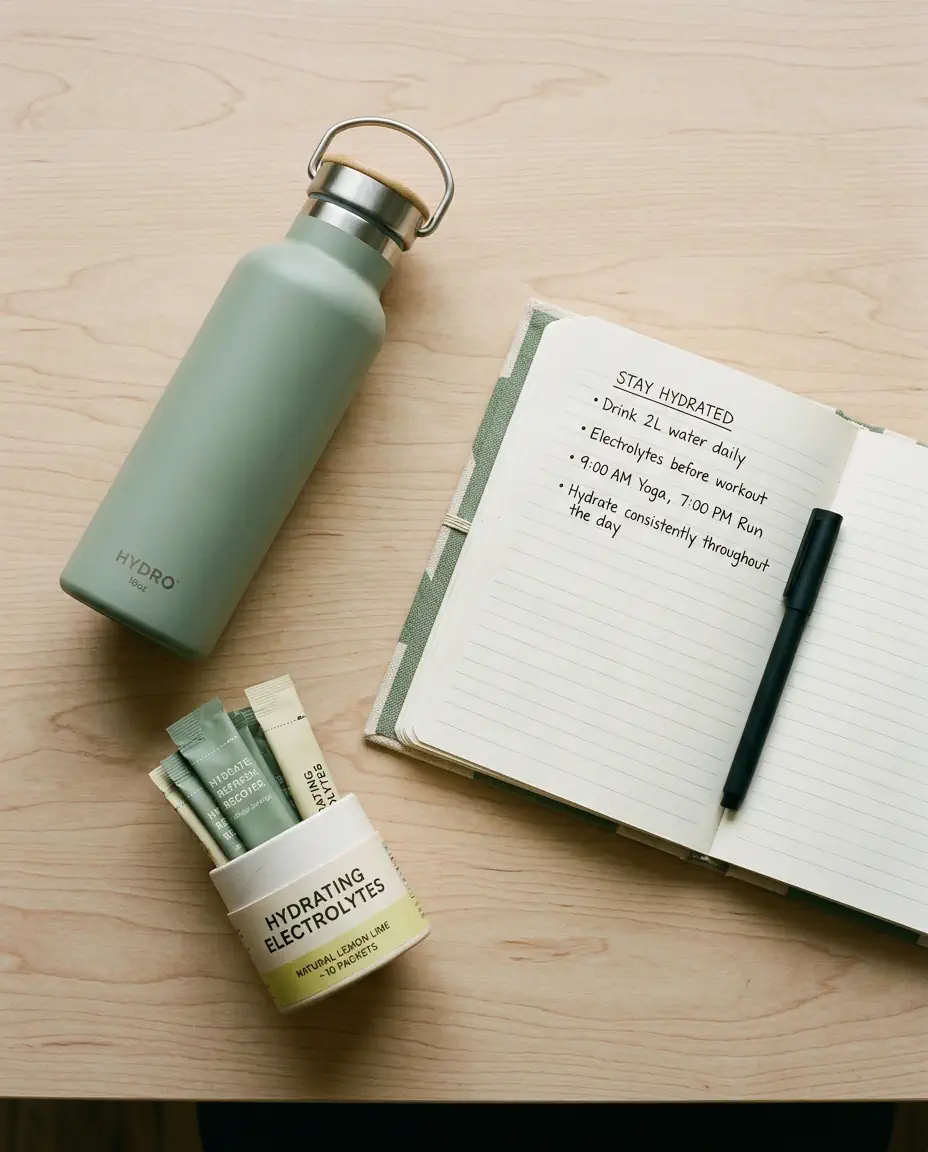
💧 Why water alone often isn't enough
In POTS, blood tends to pool in the lower body when you stand, leaving less circulating volume available for your brain and heart. Increasing fluid intake is one of the standard first-line strategies precisely because it increases that circulating volume. But water on its own passes through relatively quickly. Sodium is what helps the body hold onto that fluid in the bloodstream rather than losing it, which is why salt and fluids are almost always discussed together in POTS management, and rarely one without the other.
This is also why some people find they drink three litres a day and feel no better. The volume is going in; it just isn't staying where it's needed.
🌿 Electrolytes are one line of the conversation
Sodium is rarely the only thing worth raising, and it is rarely the thing that decides what happens next. The rest of the picture, on a page you hand over, is what turns a short appointment into a useful one.
Free, always. Unsubscribe in one click 🌿
🔗 Want more like this? Browse all our POTS guides →
🏷️ How to actually read the label
This is where most of the confusion happens, because the front of the packet almost never tells you what you need to know. Turn it over and look for these three things:
Sodium per serving, in milligrams. This is the number that matters most, and it varies enormously between products. Some sports drinks aimed at general fitness contain only a small fraction of what a dedicated rehydration or POTS-oriented product contains. If the label lists sodium as a percentage of daily value only, that percentage is calculated against a general-population target that assumes you're trying to limit sodium, which is the opposite of most POTS guidance.
Sugar per serving. A small amount of glucose genuinely helps sodium absorption in the gut, which is the principle behind oral rehydration solutions. Large amounts are mostly there for taste, and if you also have MCAS in the picture, added flavourings and colours are worth scanning too.
What else is in there. Caffeine appears in some hydration products marketed for energy, which is a separate variable you may or may not want. Our guide to POTS and caffeine covers why that one is genuinely contested.
🧂 Powder, tablets, or just salt?
Worth knowing before you choose: current cardiology guidance treats these as interchangeable routes to the same end, listing high-salt foods, sodium sachets, salt sticks and salt tablets side by side. The format is a practical question, not a clinical one.
Commercial electrolyte powders
Convenient, consistent, and easy to take with you. The main downsides are cost over time and the fact that formulations vary wildly. Two products on the same shelf can differ by a factor of ten in sodium content.
Salt tablets or capsules
Often discussed in POTS communities as a way to increase sodium without drinking flavoured liquid all day. These need a doctor conversation first: dosage matters, and they aren't appropriate for everyone, particularly if you have kidney concerns or high blood pressure alongside POTS.
Salt on food, plus plain water
The least glamorous option and, for some people, entirely sufficient. Broth, salted snacks, and generously seasoned meals spread sodium across the day rather than delivering it in one hit, which some people tolerate better.
There's no universally correct answer here. What matters more than the format is whether your total daily intake actually changed, and whether your symptoms changed with it.
⚠️ Why the "how much" question needs your doctor
You'll see specific gram targets quoted constantly in POTS spaces, and they don't agree with each other. Canadian cardiology guidance recommends up to 3 litres of fluid and 10 g of salt daily; UK patient organisations commonly cite a considerably lower range. We're deliberately not settling on a number here, and that's not evasiveness. Recommended sodium intake for POTS is individualised and depends on your blood pressure, kidney function, other conditions, and medications.
The subtype matters too. Patient guidance from Dysautonomia International notes that the commonly quoted fluid and salt figures come with an explicit exception for the hyperadrenergic subtype, so someone with hyperadrenergic POTS and elevated blood pressure may be given very different guidance from someone with low blood pressure and significant pooling. That exception is exactly what gets lost when a number circulates on its own in a forum post.
Ask your cardiologist or specialist directly: "What daily sodium and fluid target is appropriate for me specifically?" Then you have a real number to work with instead of a forum average.
🔬 There is a way to check whether it landed
If you've increased your salt and nothing has changed, there is an objective test rather than guesswork. A 24-hour urine sodium measurement is used as a surrogate for how much salt you are actually getting, and guidance suggests it when someone isn't responding to treatment or when intake is suspected to be falling short of the plan.
That is a useful thing to know exists, because "I'm definitely doing the salt" and "the salt is definitely arriving" are two different claims, and only one of them can be measured. It is a question to raise with your specialist rather than something to request off your own bat.
🌿 That question only gets answered if you get to ask it
Asking your specialist for your own sodium target is the single most useful thing in this article, and it is also the thing that gets dropped when the appointment runs short. Our free POTS Symptoms Checklist puts the whole picture on one page first, so the specific questions still have room at the end.
⚡ Instant download · 🖨️ A4 and US Letter · Undated · No spam, ever 🌿
💚 If it isn't working, that's data too
Increased salt and fluids helps a lot of people with POTS. It does not help everyone, and it very rarely fixes everything on its own. If you've genuinely increased both and nothing shifted, that's useful information for your doctor, not evidence that you did it wrong.
❓ Frequently asked questions
Are sports drinks good enough for POTS?
Many general sports drinks contain considerably less sodium and more sugar than products designed for rehydration, so they may not deliver what POTS guidance is aiming for. Checking the sodium figure in milligrams on the back of the label is more useful than the marketing on the front.
How long before I know if electrolytes are helping?
Effects on symptoms are usually gradual rather than immediate, and daily variation in POTS makes single-day comparisons unreliable. Tracking consistently for a few weeks gives a far clearer picture than judging by how one afternoon felt.
Can you have too much salt with POTS?
Yes, which is why sodium targets should come from your own doctor rather than a general recommendation. Blood pressure, kidney function and other conditions all affect what's appropriate, and increased sodium is not suitable for everyone with POTS. The hyperadrenergic subtype in particular is a documented exception to the usual salt-loading advice.
Is there a test to check whether my salt intake is high enough?
Yes. A 24-hour urine sodium collection is used as a surrogate measure of dietary salt intake, and guidance suggests it where someone is not responding to treatment or where intake is suspected to be lower than intended. It is a reasonable thing to ask your specialist about if you have genuinely increased your salt and seen no change.
What do I say if electrolytes haven't helped at all?
Say exactly that, with what you changed and for how long. "I increased fluids and sodium for six weeks and my standing heart rate did not change" is a clinical finding, not a failure, and it belongs alongside the rest of your symptoms rather than as an isolated remark.
📚 Sources & further reading
The information in this article is drawn from the following sources. We encourage you to explore them.
Raj SR, Guzman JC, Harvey P, et al., Canadian Journal of Cardiology 2020: Canadian Cardiovascular Society Position Statement on Postural Orthostatic Tachycardia Syndrome (POTS) (fluid and salt recommendation, salt formats and 24-hour urine sodium, section 7.2)
Dysautonomia International: Lifestyle Adaptations for POTS (fluid and salt intake, and the hyperadrenergic exception)
National Institute of Neurological Disorders and Stroke: Postural Tachycardia Syndrome (POTS)
Cleveland Clinic: Postural Orthostatic Tachycardia Syndrome (POTS)
Continue reading
⚕️ This article is general information for the chronic illness community and is not medical advice. Sodium and fluid targets for POTS must be set individually with your own doctor, and increased salt intake is not appropriate for everyone.