Why Are My POTS Symptoms Worse in the Morning? The Science Behind the Struggle
Reading time: about 6 minutes. Written with care for anyone who dreads the first hour of the day.
You open your eyes. Before you've even moved, your heart is already pounding. Your head feels thick, your legs feel like they belong to someone else, and the simple act of sitting up feels like a negotiation with your own body. You slept all night, so why does morning feel like the hardest part of the day?
🌿 YOUR APPOINTMENT IS AT THREE. YOUR WORST HOUR WAS SEVEN.
By the time anyone examines you, the hardest part of your day is eight hours behind you, which is exactly how a real pattern ends up recorded as "unremarkable". Hand over the whole picture on paper and the morning gets into the room with you, instead of staying at home where it happened.
⚡ Instant download · 🖨️ A4 and US Letter · Undated · No spam, ever 🌿
If this is your reality, please know two things straight away: you are not imagining it, and you are not doing something wrong. Morning symptom flares are one of the most well-documented patterns in POTS, and there are real, biological reasons behind them. Understanding why it happens is the first step to making your mornings a little gentler.

🌙 Why mornings hit hardest: the overnight story
While you sleep, several things quietly happen in your body that set the stage for a rough wake-up. None of them are your fault. They are simply how POTS interacts with the natural rhythms of sleep.
💧 1. You wake up with less fluid than you went to bed with
Through the night, your body keeps losing water, through breathing and light sweating, without taking any in. On top of that, lying flat for hours signals your kidneys to release fluid, so you lose volume through the night as well. For most people, this mild morning dehydration is no big deal. But many people with POTS already run on a lower blood volume than average, so waking up even slightly depleted means your heart has to work harder from the very first second you stand. This connection between low blood volume (hypovolemia) and POTS is well established in the research.
🧍 2. Standing up is the biggest challenge of your whole day
Think about it: after eight hours lying horizontal, the very first thing you do is stand upright. Gravity immediately pulls your blood down toward your legs and abdomen. In a typical nervous system, blood vessels tighten instantly to keep blood flowing to your brain. In POTS, that automatic response doesn't work smoothly, so your heart races to compensate. Researchers describe the shift from lying flat to standing first thing in the morning as the single most abrupt orthostatic challenge of the day. It's not that you're weak. It's that you're being asked to do the hardest physical task of your day before you've had a sip of water.
📊 3. This is measurable, not "in your head"
Here's something important, especially if you've ever been brushed off by a doctor: studies have actually measured that the rise in heart rate on standing is larger in the morning than in the afternoon. Some people meet the diagnostic criteria for POTS when tested in the morning, but not later in the day. Your morning struggle is real enough to show up on a tilt table. You deserve to be believed.
🔗 Want more like this? Browse all our POTS guides →
☀️ Gentle ways to soften your mornings
None of these are magic cures, and none of them replace the advice of your own doctor. But each one is supported by clinical evidence, and together they target the exact reasons mornings are hard. Start with one. Be patient with yourself.
🥤 Hydrate before your feet touch the floor
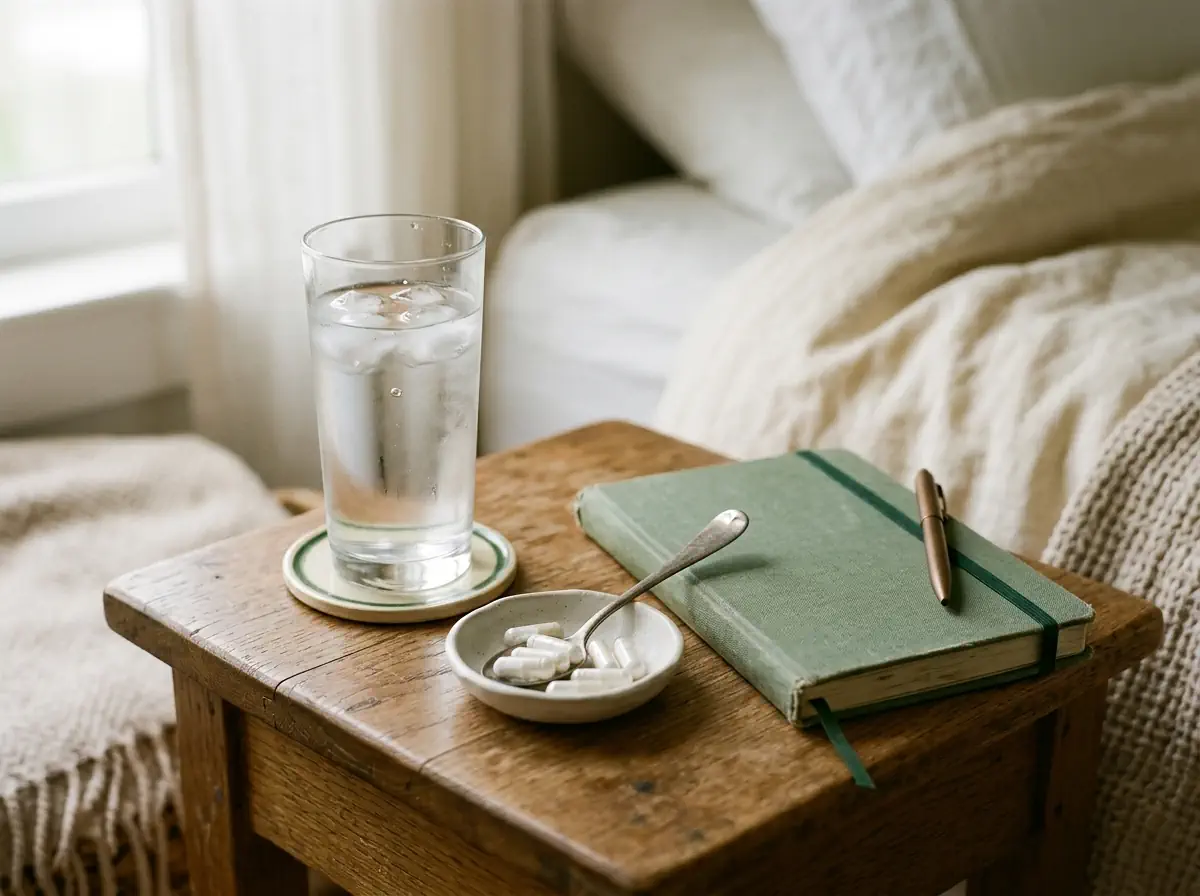
This is the single most recommended morning strategy, sometimes called front-loading. Keep a large bottle of water (many specialists suggest around 16 to 20 oz, or 500 to 600 ml) on your nightstand. Before you sit up, drink it while still lying down, then wait 15 to 30 minutes before standing. This gives your body time to absorb the fluid and expand your blood volume before gravity gets involved. There's even research showing that drinking around 16 oz of water can meaningfully raise blood pressure within just a few minutes.
🧂 Talk to your doctor about salt
Because low blood volume is so central to POTS, increasing dietary salt and fluid is one of the most evidence-backed first-line approaches. Guidance varies on the exact figures: the 2020 Canadian Cardiovascular Society position statement recommends up to 3 litres of fluid and 10 g of salt daily, while UK patient organisations commonly cite a lower range of roughly 2 to 3 litres of fluid and 3 to 5 g of salt. That spread is itself a reason to settle your own targets with your doctor rather than picking a number off a page.
This is genuinely important: salt loading is not right for everyone, particularly people with the hyperadrenergic subtype of POTS, or anyone with high blood pressure, kidney concerns, or heart conditions. This is exactly why "more salt" should be a conversation with your healthcare provider, not a guess.
🛏️ Raise the head of your bed
Elevating the head of your bed, using sturdy blocks under the bed frame rather than just extra pillows, can reduce the amount of fluid you lose overnight and help you wake with steadier blood volume. Guidance suggests a tilt of more than 10 degrees, which for most beds means something in the region of 10 to 15 cm (4 to 6 inches) at the head end. It's one of the more evidence-supported interventions, and it costs almost nothing to try.
🐢 Move from lying to standing in stages
Instead of springing upright, give your nervous system a chance to catch up. Lie down, sit up slowly, sit on the edge of the bed for a minute or two while pumping your ankles and calves to push blood back upward, then stand. These small counter-pressure movements genuinely help blood return to your heart and brain.
A note on the hard mornings
Some mornings, you'll do everything "right" and your body still won't cooperate. That's not failure, that's the unpredictable nature of dynamic illness. On those days, the kindest thing you can do is lower the bar: hydrate, rest, and let the morning be slow. You are allowed to meet your body where it is. 💚
📝 Why writing it down changes everything
Here's the quietly powerful part: when you write down your morning heart rate, your hydration, your sleep and how you felt, patterns start to emerge. You begin to see which nights lead to gentler mornings. You walk into appointments with real data instead of "I think it was bad last week?", and that changes how seriously you're taken.
You don't need anything fancy to start. A number and a note, on the same line, is often enough to begin seeing what your body has been trying to tell you all along.
🌿 THE HEART RATE IS ONE LINE. THE MORNING IS THE REST.
A number proves something happened. It doesn't show the thick head, the legs that felt borrowed, or the hour it took to get downstairs. Tick what your mornings actually involve and hand it over, because that is the part that turns a reading into a reason to investigate.
Free, always. Unsubscribe in one click 🌿
❓ Frequently asked questions
Is it normal for POTS to be worse in the morning?
Yes, it's one of the most commonly reported patterns. Organisations like PoTS UK note that symptoms often tend to be worse in the morning, and studies have measured a larger rise in standing heart rate in the morning compared to later in the day. It's a recognised, physiological pattern, not a sign you're managing things badly.
Should I really drink water before getting out of bed?
Many specialists recommend it. Drinking fluid while still lying down, then waiting 15 to 30 minutes before standing, helps expand your blood volume before gravity pulls it downward. It's simple, low-risk and widely suggested, but if you have swallowing difficulties or significant gastrointestinal issues (which are common in POTS), check with your doctor about the safest approach for you.
How much salt and water should I have each day?
The published figures differ. Canadian cardiology guidance recommends up to 3 litres of fluid and 10 g of salt daily, while UK patient sources commonly cite around 2 to 3 litres and 3 to 5 g. Salt loading is also not safe for everyone, especially those with the hyperadrenergic subtype, high blood pressure, or kidney or heart conditions. Confirm your own targets with your healthcare provider rather than choosing between the numbers yourself.
What if my appointment is in the afternoon?
It's worth saying out loud that mornings are your hardest hours, because a clinician examining you at three o'clock is seeing you at close to your best. Bringing a written record of what mornings actually look like, symptoms and not just numbers, gives them the half of the picture the appointment time can't show them.
Can I ask to be tested in the morning?
It is a reasonable thing to request, and worth raising when the appointment is booked rather than on the day. Since the heart rate rise on standing is measurably larger in the morning, an afternoon test can under-record what your body does at its worst. If a morning slot isn't available, bringing your own dated morning readings covers some of the same ground.
When should I see a doctor about my mornings?
If morning symptoms are severe, if you're fainting, or if your symptoms are getting worse or interfering with daily life, please speak to a healthcare professional. This article is here to help you understand and track your body, not to replace personalised medical care.
📚 Sources & further reading
The medical information in this article is drawn from the following reputable, publicly available sources. We encourage you to read them, and to always confirm anything relevant to your own health with a qualified professional.
Raj SR, Guzman JC, Harvey P, et al., Canadian Journal of Cardiology 2020: Canadian Cardiovascular Society Position Statement on Postural Orthostatic Tachycardia Syndrome (POTS) (fluid and salt targets, and sleeping head-up, are in section 7.2)
PoTS UK: Diet and Fluids (fluid targets, drinking before rising, salt guidance)
Cleveland Clinic: Postural Orthostatic Tachycardia Syndrome (POTS) (low blood volume, first-line management)
British Dietetic Association: How a dietitian can support people with PoTS (reduced blood volume, fluid and salt strategies)
Standing Up to POTS: Managing POTS Symptoms (drinking before rising, elevating the head of the bed)
Continue reading
⚕️ Medical disclaimer: This article is for general information and personal organisation only. It is not medical advice, diagnosis or treatment, and it cannot account for your individual situation. POTS is highly individual, and management should always be guided by a qualified healthcare professional who knows your history. Always speak with your doctor before changing your fluid, salt, medication or lifestyle routine.