
You already know how this goes
Ten minutes. A clinician who has never met you. And somewhere in your head, two years of test results, three medication changes and the symptom you promised yourself you would mention this time.
You get through maybe a third of it. The plan gets built on that third.
The paperwork of being ill has become a second illness, and nobody hands you a system for it. Your records live in four portals and a drawer. The dose that changed in March is a guess. The one page that would answer half their questions does not exist, because nobody ever gave you the page.
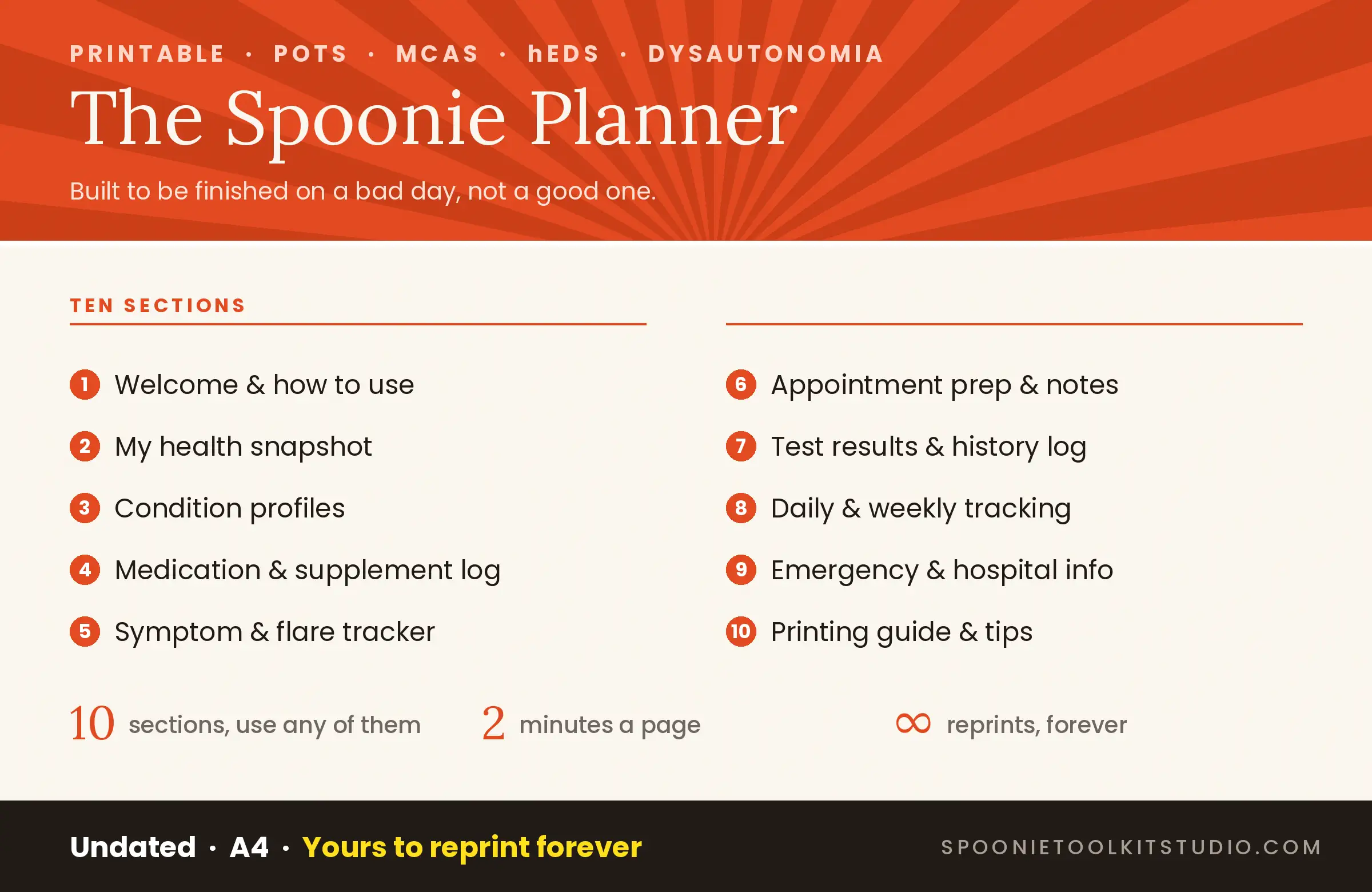
📦 Ten sections. One record.
Print only what you need, as many times as you need:
📸 My Health Snapshot: the one page that speaks for you in thirty seconds, including when you cannot
🗂️ Condition Profiles: everything you know about each diagnosis, in one place instead of five
💊 Medication & Supplement Log: every dose, every change, and what it actually did
📈 Symptom & Flare Tracker: scattered days turned into a pattern someone can read
🩺 Appointment Prep & Notes: walk in with your three, walk out with what was decided
🧾 Test Results & History Log: dates you can point to instead of dates you estimate
🗓️ Daily & Weekly Tracking Pages: sleep, energy and pacing, without a streak to maintain
🚨 Emergency & Hospital Info: the facts that matter on the day you cannot recite them
👋 Welcome & How to Use: how to make it yours without doing all of it
🖨️ Printing Guide & Tips: how to build it up over months rather than in one sitting
📄 A4 format. It prints cleanly on US Letter too: choose "fit to page" in your printer settings.
🧭 WHY IT'S BUILT THIS WAY
Most planners assume steady energy, a reliable memory and an hour to spare. This one assumes none of those. Every page is designed to be finished on a bad day rather than a good one: undated so nothing expires, tick boxes instead of blank lines, and sections that work on their own, so you never have to complete the whole thing to get something out of it.
✨ What changes
🩺 You get believed
A written record reads as fact. "I think it started a while ago" reads as a feeling. Same symptoms, different appointment.
🌿 You stop repeating yourself
New specialist, same history. Hand over the snapshot and skip the twenty minutes of reconstruction.
♾️ It is yours for good
One purchase, unlimited reprints, no subscription. Print at home for years, or fill it in on a tablet.
💗 Who it's for
People living with POTS, MCAS, hEDS, dysautonomia and other complex conditions. Especially anyone who has been dismissed, arrived unprepared, or been asked a question about their own history they could not answer.
Newly diagnosed, it saves you the two years most people spend building this by accident. Years in, it finally collects what you have already been through.
❓ Questions, answered
How is it different from the free printables?
The free pages are single tools, each answering one question on its own: how was today, what did you take, what happened in that appointment. The Planner is the system that connects them. Ten sections covering your conditions, medications, test history, appointments and emergency information, structured so they work together as one record you hand over, rather than separate sheets that each tell a fragment. It is the layer above them, with its own layout built for that job.
What paper size is it?
A4. It also prints cleanly on US Letter: in your printer settings, choose "fit to page" or "scale to fit". The margins are generous enough that nothing is cut off, and the writing space stays the same.
Is this a physical planner shipped to me?
No, it's an instant digital download (PDF). You print at home the pages you want, as many times as you like, and organise them in any folder or planner you already have. You can also use it digitally on a tablet with an app like GoodNotes.
Do I have to print the whole thing?
Not at all. The whole idea is pick-and-choose: print only the sections you need, when you need them, and reprint the tracking pages as often as you like. Many people start with just the Health Snapshot and one tracker, and add more over time.
I have no energy for another project.
Then start with one page. The Health Snapshot takes about ten minutes and is the single most useful thing in the file. Everything else can wait for a better day, or never happen at all. Nothing expires, nothing is wasted, and there is no streak to break.
Is this medical advice?
No. The planner is a personal organisation tool only, a calm place to record and organise information that comes from you and your own doctors. It doesn't diagnose, advise or replace professional care.
Which conditions is it designed for?
It was built with POTS, MCAS, hEDS and dysautonomia in mind, but it works for almost any chronic or complex health situation where keeping clear records helps, including managing several conditions at once.