Double Jointed Thumb: Why the Base Starts to Hurt
If your thumb has always bent back further than everyone else's, and now the base of it aches after a day of typing, chopping or holding a phone, you are not imagining the change. The joint that gave you the party trick is the one that wears first.
Here is the moment people recognise: you open a jar, and instead of the lid giving way, something at the base of your thumb shifts. Not a dislocation, nothing dramatic. Just a small sideways slide that makes you put the jar down. Later that evening the web of your hand aches, and your pinch feels weak in a way that has nothing to do with how strong you are.
📋 One page that gets thumb pain taken seriously
Thumb pain in a hypermobile hand gets written off as overuse, because nothing shows on a standard image. Our free hEDS Appointment Kit gives you one page that puts joints, pain and what it stops you doing in front of the clinician, so the pattern is visible before the appointment is over.
💯 100% free · 📄 3 printable pages, A4 and US Letter · 🚫 No spam, unsubscribe in one click
🧬 Why the base of the thumb is the weak point
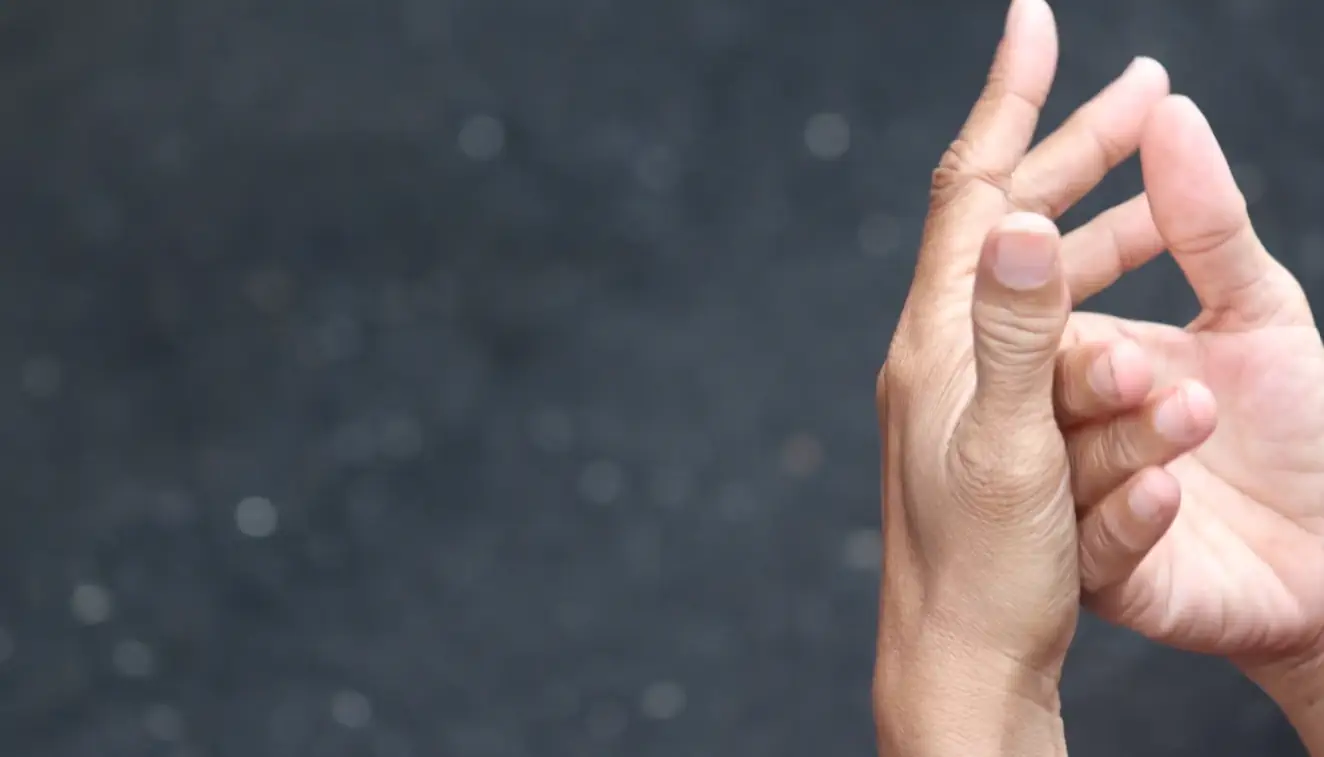
Your thumb moves in more directions than any other digit, and it pays for that freedom with very little bony support. The carpometacarpal joint at its base, where the thumb meets the wrist, is held in place almost entirely by its surrounding ligaments and by the muscles that cross it. When those ligaments are naturally lax, the joint surfaces stop sitting squarely against each other. That misalignment increases the load going through a small area of cartilage, and the joint lining can become inflamed in response.
Two things follow from that, and both are worth knowing. The first is that pain at the thumb base with reduced grip and pinch strength is the classic presentation, and it is seen most often in young women with generalised ligament laxity. The second is that left alone, persistent incongruity in that joint can set up early osteoarthritis there.
That second point is not a reason to panic. It is a reason to stop treating thumb pain as a nuisance you put up with for another decade.
🔍 Instability and arthritis are not the same problem
This distinction matters more than almost anything else in this article, because the two conditions look similar from the outside and are managed differently. Instability is a joint that moves too much. Arthritis is a joint whose surfaces have worn. They can end up in the same thumb, one leading to the other, but a treatment aimed at the wrong one rarely works.
It is also why a normal X-ray does not close the question. Instability is often confirmed on stress views, taken while the joint is pushed, rather than on a standard image taken at rest. If you have been told your thumb X-ray is fine and the pain is still there, that is a reasonable thing to raise again rather than accept.
🪶 What it looks like in an ordinary week
Pinch tasks are the ones that hurt: keys, jar lids, tweezers, pulling a plug from a socket, a bag handle on two fingers.
The ache sits at the base of the thumb or in the fleshy pad below it, not in the thumb tip.
Your thumb collapses into a Z shape when you press on something, the base sliding one way while the tip bends back.
Strength varies enormously from day to day, which makes people assume they are being inconsistent rather than unstable.
Writing, phone holding and chopping are the three activities most people name first.
🛠️ What actually helps
The encouraging part: surgery sits at the end of a long queue of other options, and most people never reach it. In an international survey of surgeons treating thumb base instability, the large majority chose non-surgical management as the first line of treatment.
A hand-based splint, chosen for the right job. Splints for this joint are designed to hold the thumb in a position that still lets you pinch, rather than to immobilise the whole hand. That difference is the point: a support you cannot use your hand in will live in a drawer. Our guide to choosing braces and supports that you will actually wear covers the trade-offs, including why all-day wear can backfire.
Strengthening the muscles that cross the joint. Because the ligaments are not going to tighten, the muscular stabilisers do the holding. This is slow, unglamorous work and it needs to be specific to the thumb, which is why a hand therapist is worth asking for by name.
Proprioception, not just strength. Impaired position sense is part of the mechanism here, not a side effect. Training the sense of where the joint is changes how well the muscles protect it, which is the same principle behind the coordination problems people with hEDS notice elsewhere.
Changing the shape of the task. Wider pen barrels, two hands on the jar, a bag on your forearm instead of your fingers, voice dictation for long messages. None of this is defeat. It is removing the load from a joint that cannot share it.
📋 If your hands are the reason you booked the appointment
Hand problems are easy to minimise in a ten-minute consultation, because they sound small. The free hEDS Appointment Kit includes the column most people leave blank, the one that says what the pain actually stops you doing, which is what turns a complaint into a referral.
Free, always. Unsubscribe in one click.
🩺 How to raise it so it gets looked at
Try naming the joint and the function in the same sentence, rather than describing flexibility. Something like: "The base of my thumb is painful and slides when I pinch. I can't open jars or write for more than a few minutes. My joints are generally hypermobile. Could this be carpometacarpal instability, and would a hand therapist be appropriate?"
Two details help that conversation land. Bring an example of a task you have stopped doing, because loss of function moves referrals in a way that pain scores do not. And mention if other joints do the same thing, since generalised laxity changes how the thumb is interpreted.
❓ Frequently asked questions
Is a double jointed thumb always a problem?
No. Plenty of people have thumbs that bend back a long way and never develop pain or instability. Hypermobility only becomes a clinical issue when it comes with symptoms: pain, repeated slipping, weakness, or a joint that is getting harder to use. Flexibility on its own is a trait, not a diagnosis.
Should I be doing thumb stretches?
Stretching is usually not the missing piece when a joint already moves too far, and pushing the thumb further into its available range can make an unstable base more symptomatic. Strength, position sense and load management are the useful directions. A hand therapist can tell you which applies to your thumb specifically, which is not something to work out from a video.
Do ring splints help for the thumb?
Ring splints are usually aimed at the small finger joints rather than the thumb base. For the base, the supports used are typically hand-based and designed to leave your pinch grip available. If you have been given something that stops you pinching altogether, it is reasonable to ask whether it is the right design for the joint that hurts.
📚 Sources & further reading
The information in this article is drawn from the following sources. We encourage you to explore them, and to always discuss your own symptoms and diagnoses with a qualified healthcare professional.
Thumb Carpometacarpal Instability: An International Survey on Terminology, Diagnostic Workup, and Treatment (mechanism, presentation, and the preference for non-surgical first-line management)
Journal of Hand Surgery: Diagnosis and Treatment of Carpometacarpal Instability (stress views, and the link with generalised hypermobility)
Journal of Orthopaedic & Sports Physical Therapy: The Carpometacarpal Joint of the Thumb: Stability, Deformity, and Therapeutic Intervention (splint design and pinch)
Continue reading
⚕️ This article is general information for the chronic illness community and is not medical advice, diagnosis or treatment. Only a qualified healthcare professional can diagnose or confirm a condition. Always consult your doctor about your symptoms and care. In an emergency, contact your local emergency services immediately.