
The Trifecta: Why hEDS, POTS and MCAS So Often Occur Together
If you've been given a diagnosis of hEDS, POTS, MCAS or dysautonomia and someone has mentioned the others in the same breath (a doctor, a forum thread, a Facebook group), you're not imagining a pattern. There is one. And understanding it can make your body finally start to make sense.
Here's a moment a lot of people in this community recognise: you stand up from the sofa. Nothing happens for a second. Then your heart starts hammering, the room tilts slightly, heat washes over you, and you feel like you've just sprinted for a bus, except you haven't moved more than a few steps. If your joints also bend further than most people's, and you've had unexplained rashes, food reactions, or flushing episodes on top of it all, you may be living with what patient communities and some clinicians call the trifecta: hEDS, POTS, and MCAS, occurring together.
📋 One page instead of three separate stories
The hardest part of overlapping diagnoses is that each specialist hears a fragment. Our free hEDS Appointment Kit puts joints, gut, autonomic and skin symptoms on a single page you can hand over, so the connections arrive in the room with you instead of being reconstructed from memory at every visit.
💯 100% free · 📄 3 printable pages, A4 and US Letter · 🚫 No spam, unsubscribe in one click
📊 The numbers are more common than most people expect
If you've ever felt like your combination of diagnoses was some rare, unlucky coincidence, the research says otherwise. A 2025 study published in Autonomic Neuroscience surveyed 84 women with hypermobility spectrum disorder or hEDS. Among them, 58.3% reported a physician diagnosis of POTS, 32.1% had MCAS, and 25%, one in four, reported all three diagnoses at once. The same cohort reported chronic pain at 98.8%, and autonomic symptom scores indicating severe dysfunction.
Two honest caveats about those figures, because they matter. This was a survey of 84 women recruited through hypermobility care, so the numbers describe that group rather than everyone with hEDS. A general population would almost certainly look different. And diagnoses were self-reported as physician-given rather than confirmed by the researchers.
None of this means everyone with one condition will develop the others. But it does mean that if you're managing more than one of these diagnoses, you're part of a documented pattern: not an outlier, and not someone whose body is inexplicably falling apart in every direction.

🧬 Why these three conditions cluster together
The leading explanation comes down to connective tissue, the material that gives structure to your joints, skin, and blood vessels. In hEDS, this tissue is more stretchy and less structurally supportive than it should be. That's obvious in joints that move further than expected. It's less obvious, but just as real, in blood vessels.
Veins are made of connective tissue too. When that tissue is looser, veins stretch more than they should when you stand up, blood pools in your legs and abdomen instead of returning efficiently to your heart, and your autonomic nervous system has to work harder to compensate, which is a large part of what's happening in POTS. Some researchers describe this as structural fragility feeding directly into autonomic dysfunction.
MCAS is the least settled part of the picture, and it's worth being straight about that. Researchers have explored a genetic variant called hereditary alpha-tryptasemia as one possible thread connecting mast cell activity, hypermobility and dysautonomia, and the working theories involve mast cell mediators affecting connective tissue while also driving autonomic dysregulation through inflammatory signalling. But this is an active area of investigation rather than established mechanism: the association is better documented than the explanation for it.
🔗 Explore by condition: POTS guides · MCAS guides · hEDS guides
💭 What it can feel like day to day
On paper, these are three separate diagnoses. In a body, they rarely stay in their own lanes. A hot day might trigger both a POTS flare and an MCAS reaction. A joint subluxation might spike pain and, through pain and stress, worsen dysautonomia symptoms for the rest of the day. Brain fog, fatigue, GI issues, and heightened sensitivity to food, temperature, or medication can show up as one tangled experience rather than three distinct symptom lists.
This is precisely why the trifecta is difficult to diagnose and treat one condition at a time. A cardiologist may see the POTS. An allergist may see the MCAS. A rheumatologist or geneticist may see the hEDS. Unless someone is looking at the whole picture, it's easy for each specialist to treat their piece in isolation, and for you to feel like you're explaining a different, unconnected illness at every single appointment.
🩺 Getting your care team to see the whole picture
You don't need to diagnose yourself, and this article isn't suggesting you should. But if you've been diagnosed with one of these conditions and are noticing symptoms that don't fit neatly into that diagnosis, it can be worth raising the possibility of overlap with your doctor, using language like: "I've read that hEDS, POTS and MCAS often occur together. Is this something worth exploring given my symptoms?"
A few things tend to help when you're navigating multiple, overlapping diagnoses:
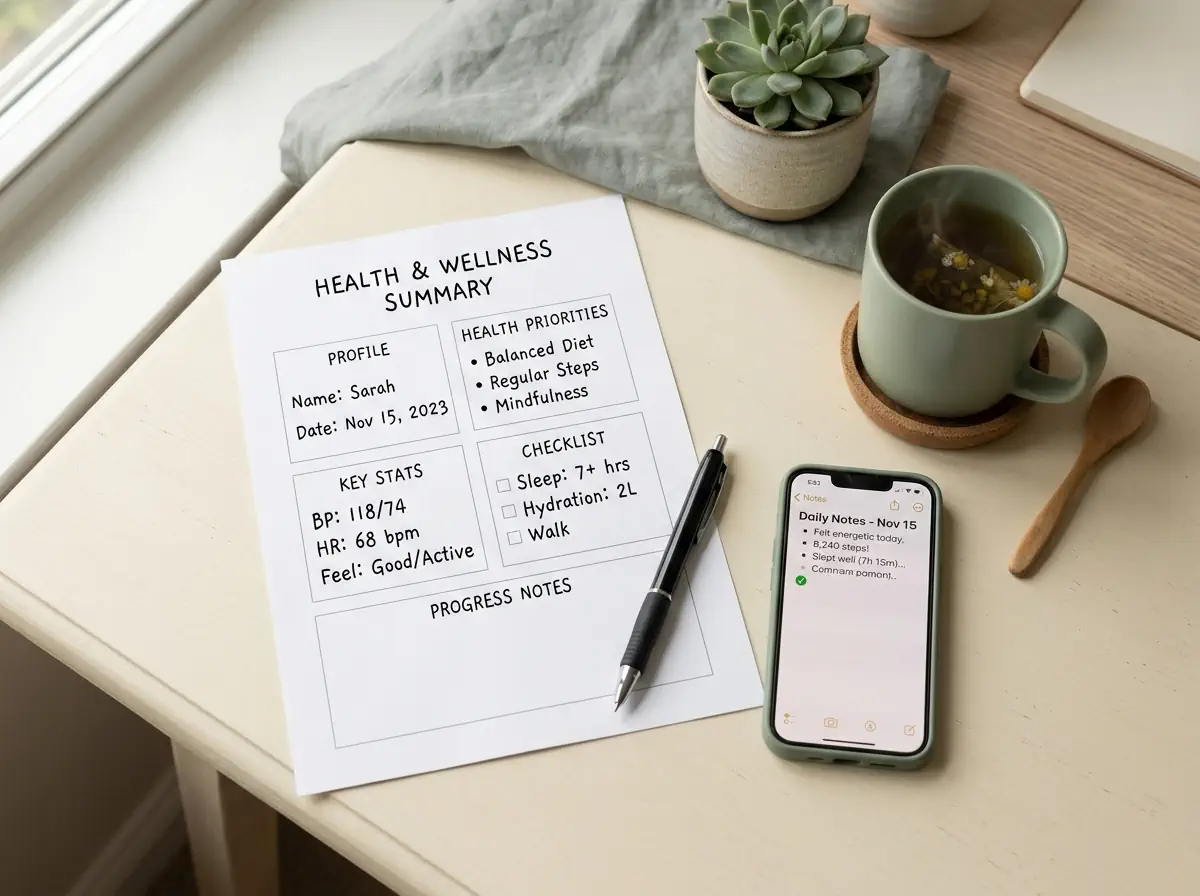
📋 One clear record, not three separate stories. When your history lives in one place (symptoms, medications, what helps, what doesn't), it's far easier for any specialist to see the connections, instead of hearing a fragment of your story each visit.
🔗 Bringing your full symptom list, even the ones that seem unrelated. The joint pain and the racing heart and the food reaction might feel like separate complaints. To a clinician who understands the trifecta, they may be pieces of the same picture.
🧑⚕️ Asking who's coordinating your care. With three (or more) specialists potentially involved, it's worth asking explicitly who is looking at the whole picture, or accepting that, often, it ends up being you.
🌿 You're not managing three separate illnesses badly: you're managing one complex, connected picture
That distinction matters. It's not that you have poor discipline juggling multiple conditions. You're dealing with a genuinely interconnected physiological pattern that even specialists are still learning to treat holistically. Be as patient and as kind with yourself as you would be with a friend carrying the same load.
ℹ️ A note on what this article is, and isn't
This article describes a documented pattern of co-occurrence between already-diagnosed conditions: it is not a checklist for diagnosing yourself, and having symptoms that overlap with this pattern doesn't mean you have all three conditions. Diagnosis of hEDS, POTS, or MCAS requires proper clinical evaluation, and only a qualified healthcare professional can make or confirm any of these diagnoses.
📋 If nobody is coordinating your care, this does part of the job
Often the person holding the whole picture ends up being you, which is a lot to carry in your head. The free hEDS Appointment Kit is three printable pages that carry it for you: every system on one sheet, the pattern behind it, and the three things to say first when the appointment is short.
Free, always. Unsubscribe in one click.
❓ Frequently asked questions
Do I automatically have all three conditions if I have one?
No. Having one of these diagnoses does not mean you will develop the others. The research shows a significant overlap in some populations, but it describes a pattern of increased likelihood, not a certainty. Many people live with just one of these conditions their whole lives.
Is the trifecta an official medical diagnosis?
"Trifecta" is a term used in patient communities and by some specialists to describe the observed clustering of hEDS, POTS and MCAS: it is not itself a formal diagnostic category. Each condition still requires its own individual diagnosis by an appropriate specialist.
Which specialist should coordinate care for overlapping conditions?
This varies by healthcare system and individual case. It might be a geneticist, a cardiologist, an immunologist, or a primary care doctor comfortable coordinating complex cases. If no one is clearly coordinating your care, it is a completely reasonable question to raise directly with your care team.
📚 Sources & further reading
The information in this article is drawn from the following sources. We encourage you to explore them, and to always discuss your own symptoms and diagnoses with a qualified healthcare professional.
Fuster et al., Autonomic Neuroscience (2025): Autonomic symptom burden, comorbidities and quality of life in women with Hypermobility Spectrum Disorders and hypermobile Ehlers-Danlos syndrome (source of the 58.3% / 32.1% / 25% figures)
Clinical Gastroenterology and Hepatology: AGA Clinical Practice Update on Hypermobile Ehlers-Danlos Syndrome
Dysautonomia International: Postural Orthostatic Tachycardia Syndrome
The Ehlers-Danlos Society: hEDS Diagnostic Checklist
Continue reading
⚕️ This article is general information for the chronic illness community and is not medical advice, diagnosis or treatment. Only a qualified healthcare professional can diagnose or confirm a condition. Always consult your doctor about your symptoms and care. In an emergency, contact your local emergency services immediately.