
Spoon Theory Explained: What It Means and How to Actually Use It
Someone in a comment section says they are "out of spoons" and everyone seems to know what that means except you.
It is not a coping slogan, and it is not a personality type. It started as one woman trying to answer a question at a diner table in 2003, and it has outlasted two decades because it does something no medical vocabulary manages: it makes an invisible limit visible to someone who has never had one.
🥄 There is a page for this
The theory is easy to understand and surprisingly hard to apply, because it asks you to price a day before you spend it. Our free Daily Wellness Tracker includes a visual spoon budget, so the counting happens on paper instead of in your head.
⚡ Instant download · 🖨️ A4 and US Letter · Undated · No spam, ever 🌿
🍽️ Where it came from
Spoon theory was written by Christine Miserandino, who lives with lupus, and published on her site But You Don't Look Sick in 2003. She and her best friend were in a diner, late, eating chips. Her friend asked, out of nowhere, what it actually felt like to be sick.
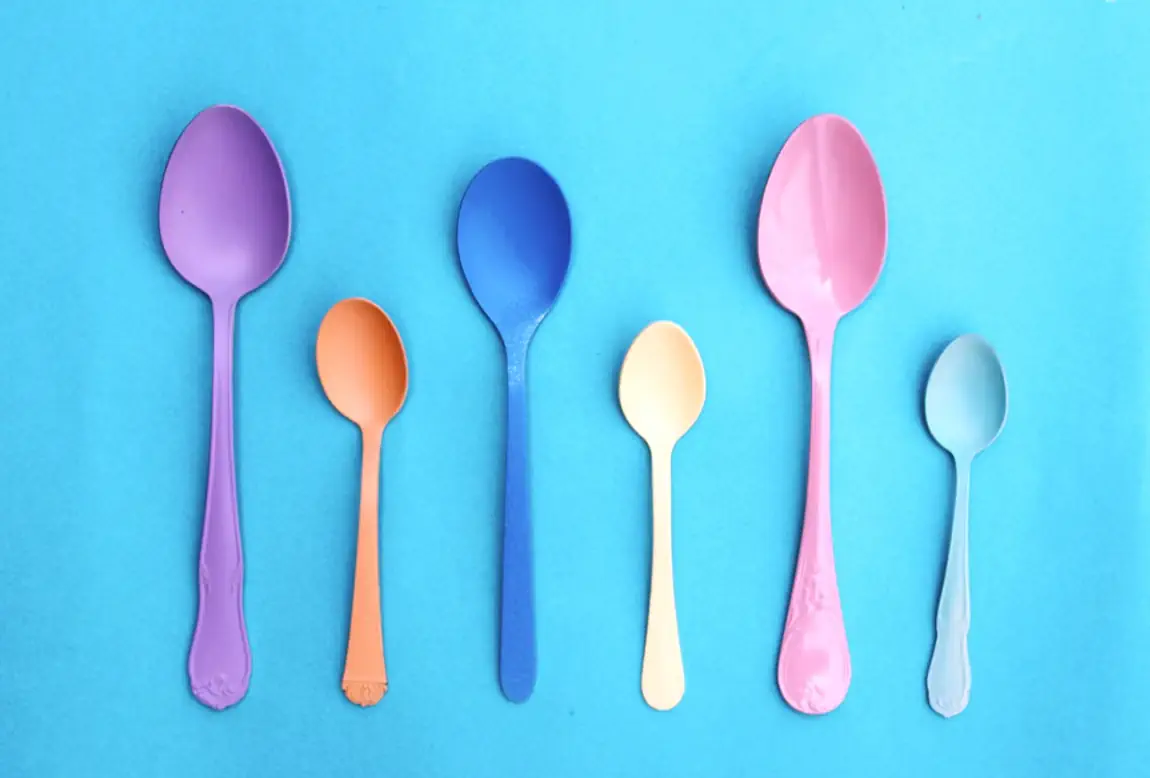
Rather than list symptoms, she gathered the spoons from the surrounding tables, handed her friend a fistful, and told her that was the whole day.
Then she made her spend them. Getting out of bed, one spoon. Showering, another. Standing long enough to cook, another. Before lunch, the pile was visibly smaller.
The friend, who had unlimited spoons and had never had to think about it, understood in about five minutes what years of describing fatigue had failed to convey.
⚙️ What the metaphor actually says
Three things, and they are the whole theory.
The supply is finite. A healthy person effectively has an unlimited number for ordinary tasks. Chronic illness caps the number, and the cap is the part nobody can see from outside.
Everything costs something. Including the tasks that are invisible as effort. Washing your hair. Concentrating in a meeting. Having a difficult conversation. Standing in a queue.
You cannot borrow against tomorrow without paying interest. Spending beyond the day's supply is possible, and it is usually paid back the next day or the one after, at a worse rate than you borrowed.
That last point is where the metaphor stops being poetic and starts being useful. It is the reason "I had a good day, so I did everything, and then I lost three" is such a familiar story.
🧮 Using it rather than quoting it
The gap between understanding spoon theory and applying it is wide, and it comes down to one uncomfortable step: deciding what a day costs before living it.
A workable version looks like this.
Set today's number honestly. Not the number you wish you had. Twelve is the figure Miserandino used in the original demonstration, and it remains a reasonable starting point, adjusted down after a bad night or during a flare.
Price the fixed costs first. The things happening regardless: the commute, the school run, the appointment. What is left over is what you actually have to allocate.
Spend the remainder deliberately. Two spoons on something that matters beats four spoons on things that happened to you.
Keep one in reserve. Days go wrong. A day with nothing held back turns a small problem into a crash.
The counting is not the point. The point is that a rough number makes a decision possible at ten in the morning, when saying no is still cheap, rather than at four in the afternoon when the day has already been spent.
💚 It is a communication tool before it is a planning tool
Its greatest strength is still the original one: handing someone a way to picture a limit they have never experienced. "I have two spoons left" lands where "I'm tired" does not, because it names a quantity rather than a feeling. If you are trying to make a partner, a manager or a parent understand, this is often the shortest route there is.
🤝 Who uses it, and who it is for
It was written about lupus and spread first through the chronic illness community, where "spoonie" became a word people call themselves. It is now used well beyond that, by people living with ME/CFS, fibromyalgia, multiple sclerosis and long COVID among others, and by many neurodivergent people describing a similar ceiling on capacity.
There is no membership test. If the idea of a finite daily supply describes your experience, it describes it.
⚠️ Where it stops working
Two honest limits, because the metaphor is often oversold.
It is a description, not a treatment. Counting spoons does not create more of them. It helps you allocate what exists, and that is genuinely valuable, but it is not a management plan and it does not replace one.
Not all spoons are interchangeable. Physical capacity and cognitive capacity can run out separately, which is why a day of meetings can leave you unable to think while still able to walk. If that is your pattern, tracking two numbers works better than one.
Pacing, which is the more structured version of the same idea, is covered in our guide to the energy management method every spoonie should know. And the reason yesterday's spending shows up a day later is explained in post-exertional malaise.
🥄 Put the number on paper
Kept in your head, the count quietly becomes optimistic by mid-morning. The free tracker gives the spoon budget a line of its own, next to the day's energy and symptoms, so the pattern becomes visible over weeks rather than staying a daily guess.
Free, always. Unsubscribe in one click 🌿
❓ Questions, answered
Who invented spoon theory?
Christine Miserandino, who lives with lupus, in an essay published on her site But You Don't Look Sick in 2003. She improvised it in a diner using the spoons from nearby tables, to answer a friend who had asked what being ill actually felt like.
How many spoons does a day have?
There is no fixed number, and that is deliberate. Miserandino used twelve in the original demonstration, and most people who use it pick a rough figure that suits them and adjust it down after poor sleep or during a flare. Consistency with yourself matters more than the number itself.
What does spoonie mean?
Someone who lives with a chronic illness and uses spoon theory to describe their limited daily energy. It is a self-chosen term rather than a clinical one, and it carries a sense of shared experience.
Do you have to be diagnosed to use it?
No. It is a communication tool, not a diagnosis. Plenty of people use it while still seeking answers, and many outside the chronic illness community find it describes their experience too.
Is spoon theory the same as pacing?
Related but not identical. Spoon theory is the metaphor that makes the limit visible; pacing is the practical method of staying within it, usually by keeping activity below the level that triggers a crash. Most people meet the metaphor first and the method second.
📚 Sources & further reading
The original essay is short, and worth reading in full rather than in summary.
Christine Miserandino, 2003: The Spoon Theory, But You Don't Look Sick (the original article, also available as a PDF)
Case Management Society of America: Understanding the Spoon Theory (how the metaphor is used across conditions)
⚕️ This article is general information for the chronic illness community and is not medical advice. Spoon theory is a communication and planning tool, not a treatment, and it does not replace guidance from your own clinicians.