
How to Prepare for a Doctor's Appointment When You Have a Chronic Illness
Reading time: about 7 minutes. Written for anyone who has ever walked out of an appointment thinking "I forgot to mention the most important thing."
You've waited weeks, maybe months, for this appointment. You have fifteen minutes. And somewhere between the waiting room and the exam table, half of what you needed to say evaporates, lost to nerves, brain fog, or the simple impossibility of summarising months of a complex illness while someone watches the clock.
🌿 "It's been bad for about two months" is a guess
Nobody can reconstruct eight weeks of a fluctuating illness in a waiting room, and the version you manage on the day is always thinner than the truth. Our free Daily Wellness Tracker is one page a day, so the record already exists by the time the appointment comes round.
⚡ Instant download · 🖨️ A4 and US Letter · Undated · No spam, ever 🌿
Then you get to your car and remember the one symptom that mattered most.
If this is painfully familiar, you're far from alone, and it is not your fault. Living with a chronic illness like POTS, MCAS, hEDS or dysautonomia means managing a huge amount of fluctuating information with a body and brain that are already stretched thin. The answer isn't to try harder to remember in the moment. It's to prepare beforehand, so the appointment works for you. Here's how.
🤔 Why these appointments are so uniquely hard
It helps to name why this is difficult, because once you see it, you stop blaming yourself. With a chronic illness, you're often managing a long and evolving history, multiple medications, and symptoms that fluctuate, which makes them genuinely hard to describe from memory in a short visit. Add pain, fatigue and brain fog, and it's no wonder key details slip away once you're in the room.
The goal of preparation isn't to become the "perfect patient." As one long-time patient advocate beautifully put it: your role isn't to be convenient, your role is to be accurate. Preparation is simply how you make accuracy possible when your energy is limited.

🔗 Want more like this? Browse all our chronic illness life guides →
🧾 Before the appointment: build your case gently
1️⃣ Keep a symptom record in the weeks beforehand
This is the foundation everything else rests on. Rather than trying to recall how you've been "in general," a symptom diary kept over the weeks before your visit gives you real, specific data. Note when symptoms occur, how severe they are, how long they last, and what seems to trigger them. This turns a vague "I've been feeling awful" into concrete, documentable information your doctor can actually act on.
2️⃣ Prioritise your top 1–3 concerns
This one is counter-intuitive but important. With only 15 minutes, listing every symptom you've ever had can actually work against you. Patient advocates consistently advise choosing your 1 to 3 most debilitating symptoms, the ones that most affect your ability to function, and leading with those. You can mention others, but make sure the things that matter most are heard first, while there's still time.
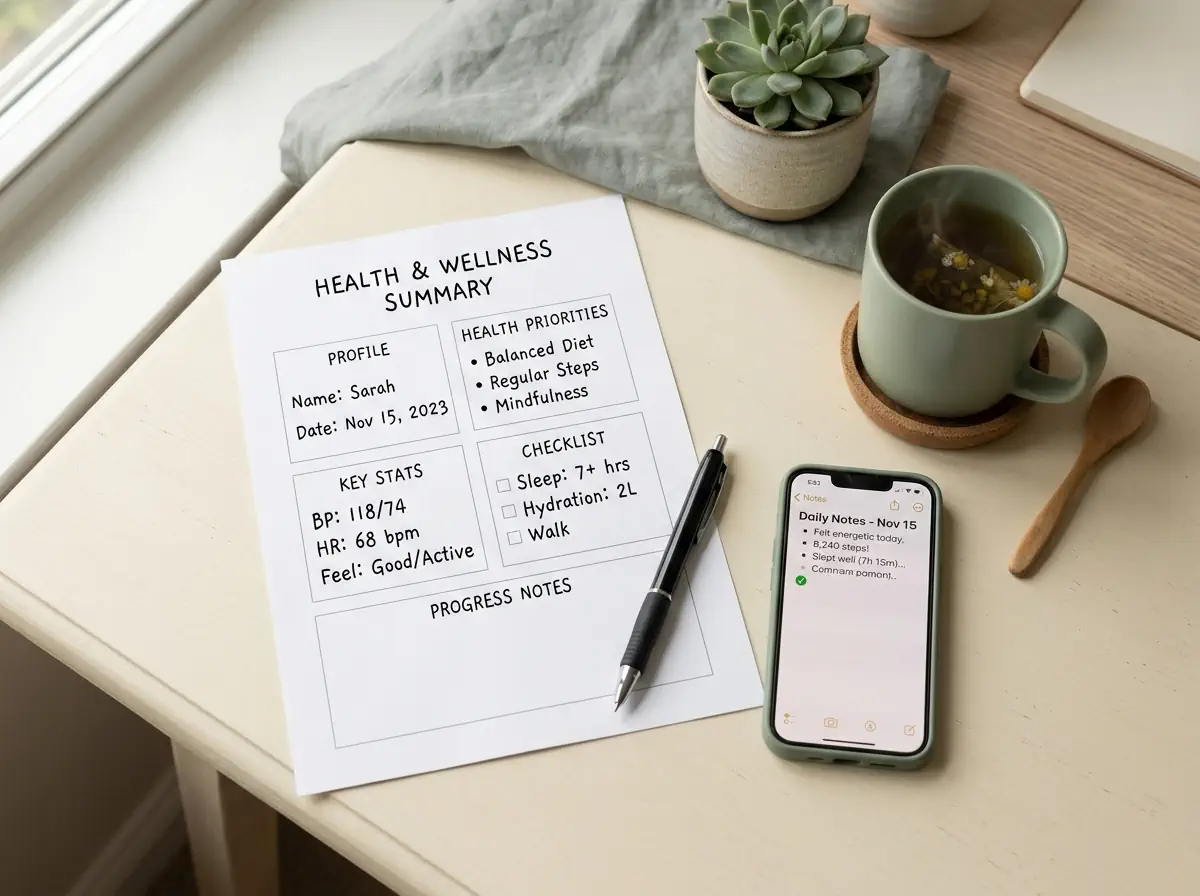
3️⃣ Write a one-page summary
A single, clear page is one of the most powerful tools you can bring. A helpful summary often includes your current medications and supplements (with doses), your key symptoms and how they've changed, what you've already tried, and your main questions or goals for the visit. Bringing two copies, one for you and one to hand to your doctor, means important details get documented even if you forget to say them out loud.
4️⃣ Write your questions down in advance
Brain fog and nerves make it easy to forget questions in the moment. Jot them in your phone or on paper beforehand, and keep the list short and focused, around three to five clear questions. This keeps the conversation manageable and makes sure your real concerns don't get lost.
🗣️ During the appointment: being heard
Lead with your prepared summary
A simple, confident opening works wonders. Something like: "I wrote down my main concerns so I don't forget anything, here's a copy for you." Handing over your page immediately positions you as organised and makes your doctor's job easier.
Describe symptoms factually, and don't minimise
Many of us instinctively downplay what we're going through, but this can lead to symptoms being underestimated. Try to describe your experience honestly and specifically (duration, frequency, severity, impact on daily life) rather than brushing it off. Being clear and factual about how much your life is affected isn't complaining; it's giving your doctor the accurate picture they need.
Bring someone, or take notes
If you can, bring a trusted person to help remember details and advocate for you, especially helpful if you tend to "go blank" or are dealing with fatigue and fog. If you're on your own, jot down key points during the visit, or ask if you may record the instructions so you can refer back later.
It's okay to ask for clarification
If something isn't clear, ask. You're allowed to request plain-language explanations, to ask for more time, and to be involved in decisions about your care. A good clinician wants you to understand your plan.
🔄 After the appointment: closing the loop
Preparation continues after you leave. Note down what was decided, any tests or referrals promised, and the timeframe. If you don't hear back within that window, it's completely reasonable to follow up through the patient portal or by phone: "I'm following up on the tests we discussed on [date], could you give me an update?" This gentle persistence is part of advocating for yourself.
🧵 The thread running through all of this: track, so you can tell your story
Every single step above gets easier when you've been tracking your symptoms consistently. A good record means your one-page summary almost writes itself, your top concerns are obvious, and your "it's been bad for about two months, worse in the mornings" is backed by actual notes instead of a tired guess.
You deserve to be believed. And one of the most powerful ways to be believed is to walk in with calm, clear, written evidence of what your body has been doing.
❓ Frequently asked questions
What should I bring to a chronic illness appointment?
A helpful kit includes: a one-page summary of your situation, a list of current medications and supplements with doses, your recent symptom notes or diary, any relevant test results, and a short list of your prioritised questions. Bringing two copies of your summary, one to keep and one for your doctor, helps ensure everything gets documented.
How many questions should I ask?
Focus on around three to five important questions. This keeps the discussion clear and manageable within a short appointment, and makes sure your most pressing concerns are actually addressed rather than rushed.
What if I feel dismissed or not believed?
This is a painful and unfortunately common experience. Preparation helps, since clear, written, factual records make your symptoms harder to overlook. You're also allowed to speak up calmly, for example: "I don't feel my concerns have been fully addressed." If a pattern of dismissal continues, it may be a sign that this particular provider isn't the right fit for you.
How far in advance should I start preparing?
Ideally, start a symptom diary a few weeks to a couple of months before your appointment, so you have real patterns to share. The practical prep, meaning your summary and questions, can be pulled together in the days before. Even a little preparation makes a meaningful difference.
What if I'm too unwell to track every day?
Then track badly. A record with gaps in it is still far more useful than nothing, and the days you were too unwell to write are themselves information. Consistency matters more than completeness here.
What should I do if I run out of time in the appointment?
Say so before you leave the room, rather than afterwards. "We haven't got to the second thing on my list, can we book a follow-up for it?" keeps the remaining concern on the record instead of losing it entirely. If you handed over your summary at the start, the unaddressed items are already documented, which is one of the quieter reasons the page is worth bringing.
📚 Sources & further reading
The guidance in this article draws on established patient self-advocacy resources. We encourage you to explore them, and to always confirm anything relevant to your own health with a qualified professional.
Healthline: 10 Ways to Be Your Own Advocate at the Doctor's Office
Solace Health: Preparing for Specialist Appointments with Chronic Illness (one-page summary, priority system, follow-up)
Peach Health Advocates: How to Prepare for a Doctor's Appointment: Tips from a Patient Advocate (prioritising concerns, describing symptoms specifically)
🌿 The one-page summary writes itself, if the record exists
Everything on this page, the top three concerns, the summary, the specifics that stop you being dismissed, comes from the same place. A few weeks of notes turns preparing for an appointment into copying something out, rather than trying to remember.
Free, always. Unsubscribe in one click 🌿
Continue reading
⚕️ Medical disclaimer: This article is for general information and personal organisation only. It is not medical advice, diagnosis or treatment. Always consult a qualified healthcare professional about your symptoms and care. If you are experiencing a medical emergency, contact your local emergency services immediately.