Low-Histamine Grocery List: A Practical Starting Point for MCAS
🍽️ Grilled salmon and spinach shouldn't feel like a gamble
You sit down to what looks like a genuinely healthy dinner, salmon, spinach and avocado, and an hour later you're dealing with brain fog, a racing heart, hives, or your stomach in knots. If you live with MCAS or histamine intolerance, that's not a coincidence and it's not in your head. Some of the "healthiest" foods on paper are among the highest in histamine. This is a starting point, not a rulebook: everyone's tolerance is different, and this isn't a diagnosis or treatment plan.
🌿 The bucket holds more than food, and a food diary only shows the plate
If the same meal is fine on Tuesday and not on Friday, the answer was never only on the plate. Tick what happens across every system and you can finally see what else was filling it that week.
⚡ Instant download · 🖨️ A4 and US Letter · Undated · No spam, ever 🌿
🪣 Think of it as a bucket, not a blacklist
A useful mental model: your body has a "histamine bucket." Food is only one thing filling it, since stress, heat, hormones and other triggers add to it too. Symptoms show up once the bucket overflows, not necessarily from any single food in isolation. This is why the same meal can be fine one day and trigger a reaction the next; it's rarely just about what's on the plate.
🔗 Want more like this? Browse all our MCAS guides →
✅ Generally well-tolerated (a starting list)
🍗 Fresh proteins: chicken, turkey, and fish cooked the same day. Freezing immediately after purchase actually helps, since histamine builds the longer food sits.
🌾 Grains: rice, quinoa, millet, buckwheat.
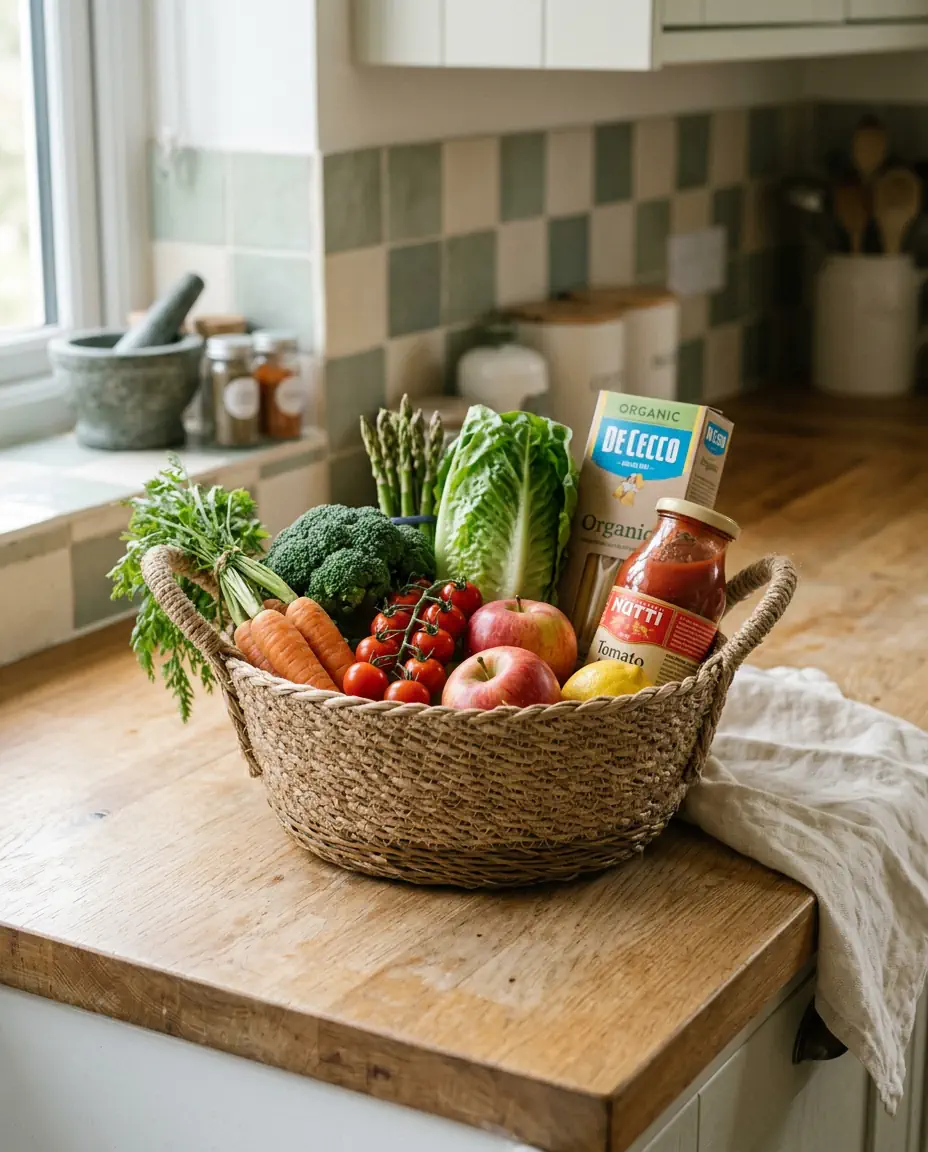
🥦 Vegetables: zucchini, squash, carrots, broccoli, cauliflower, cucumber, iceberg lettuce, sweet potatoes.
🍏 Fruits: apples, pears, blueberries, mango, coconut.
🫒 Fats: olive oil, coconut oil.
🌿 Herbs: basil and parsley. Note that some herbs like rosemary, sage and oregano are high in salicylates, a separate sensitivity some MCAS patients also have.
⚠️ Common triggers to watch for
🧀 Aged and fermented foods: aged cheese, cured meats, sauerkraut, kimchi, yogurt.
🍱 Leftovers and slow-aged proteins: histamine accumulates the longer food sits, even refrigerated.
🍅 Histamine liberators, meaning foods that trigger your own mast cells to release histamine even though they're not high in it themselves: citrus, tomatoes, spinach, strawberries, avocado.
🍷 Alcohol, especially red wine, beer and champagne.
🐟 Is salmon high in histamine? The fish question, answered properly
This is the question that sends most people to a search bar, and the honest answer is that it depends far less on the species than on what happened to the fish after it was caught. Histamine isn't sitting in a live salmon waiting for you. It forms afterwards, produced by bacterial enzymes once the fish dies, and it builds steadily whenever the fish isn't chilled fast enough or is kept too long.
The part that catches people out: once histamine has formed, it cannot be removed by washing, freezing or cooking. Worth being precise here, because it sounds contradictory otherwise. Chilling and freezing prevent more histamine from forming, but they can't undo what already has. Freezing fish the day you buy it is still one of the best things you can do; it just isn't a rescue for fish that sat too long first. A well-handled fillet and a badly handled one can look and smell identical on the plate. That's also the reassuring half of the story, because properly harvested and quickly chilled fish carries very little.
Where salmon actually sits
🧊 Fresh salmon, chilled fast and eaten the same day, usually one of the better-tolerated fish. Counterintuitively, salmon frozen at sea is often gentler than "fresh" salmon that has spent three days on a counter.
🥫 Canned salmon, generally higher. The fish is processed and then stored for months, and tinned fish of all kinds is one of the most commonly reported triggers in this community.
🔥 Smoked salmon, typically the highest of the three. Curing, salting and cold-smoking are all slow, time-based processes, which is exactly the condition histamine needs.
The fish most likely to cause trouble
Dark-fleshed species are the classic offenders because their muscle tissue is naturally rich in histidine, the amino acid histamine is built from: tuna, mahi-mahi, mackerel, sardines, anchovies and herring. The FDA singles out tuna and mahi-mahi specifically when discussing histamine formation in seafood.
A lower-histamine approach to fish
Rather than a fixed "safe list," most people do better with a handling rule: buy flash-frozen or frozen-at-sea where you can, thaw it in the fridge rather than on the counter, cook it the day you thaw it, and eat it straight away. If you do want to keep half for another meal, put it in the freezer while it's still fresh rather than leaving it in the fridge overnight. White fish like cod, haddock, sole and plaice tend to be easier than the dark-fleshed group, but a badly handled cod will still cause problems and a well-handled salmon often won't.
One thing worth flagging: fish is a genuinely useful source of protein and omega-3s, and cutting all of it out indefinitely is a bigger decision than it looks. If fish reliably causes reactions, that's a conversation for a dietitian or your doctor rather than a permanent solo exclusion. A severe or rapid reaction to fish specifically should also be assessed properly, since a true fish allergy and scombroid poisoning are both separate things that need different handling.
🔥 How you cook matters as much as what you buy
Research on food preparation has found that grilling and frying significantly raise histamine levels, with one study finding fried vegetables showed up to a 2.5-fold increase. Boiling, steaming or pressure-cooking are gentler methods. Fresh, quickly-prepared meals beat anything reheated or left to sit, and freezing leftovers immediately, rather than refrigerating, slows histamine buildup considerably.
📋 A note on "safe" lists
Histamine food lists vary between sources, and not always for good reason: some were built by recording every food a study participant reacted to, without distinguishing true histamine reactions from other sensitivities like oxalates or salicylates. Individual tolerance genuinely differs, since some people manage a few raspberries fine while others react to a single bite. Treat any list, including this one, as a place to start experimenting from, not a rigid rulebook.
🔄 Swap, don't just drop
An overly restrictive diet long-term isn't the goal and can create its own problems, including nutritional gaps. The more sustainable approach is swapping a high-histamine food for a lower one where possible, rather than simply cutting foods out, and reintroducing tolerated foods over time as your system stabilises, ideally with a dietitian or provider familiar with MCAS involved.
💚 You're not "allergic to everything"
It can feel that way when reactions seem unpredictable. But this is about mast cells that need extra consideration, not a body that's broken. Finding your own list takes time, and that's normal, not a sign you're doing it wrong.
🌿 When the list only ever gets shorter, that is the thing to report
This article's own advice is to swap rather than cut, and to do it with a dietitian. The hard part is being sent to one. Hand over a page covering the whole picture and the request stops sounding like a preference about food.
Free, always. Unsubscribe in one click 🌿
❓ Frequently asked questions
Is salmon high in histamine?
Is canned or smoked salmon worse than fresh?
Which fish are lowest in histamine?
Can I cook or freeze the histamine out of fish?
Is a low-histamine diet officially recognised for MCAS?
Why do I react differently to the same food on different days?
Should I stay on a low-histamine diet permanently?
📚 Sources & further reading
The information in this article is drawn from the following sources. We encourage you to explore them.
U.S. Food & Drug Administration: Fish and Fishery Products Hazards and Controls (Chapter 7: Scombrotoxin/Histamine Formation)
RTHM: Low-Histamine Diet for MCAS: Foods to Eat and Foods to Avoid
The EDS Clinic: Guide to Low-Histamine Diets
Lighthouse EverLucent Health: Diet and MCAS: What to Eat When You React to Everything
Continue reading
⚕️ This article is for general informational purposes only and is not medical or dietetic advice. Histamine tolerance is highly individual, so please work with a healthcare provider or registered dietitian before making significant dietary changes.