The Home Flare Kit: Building a Rescue Station for Bad Days
"The hardest thing during a flare is getting up to get food," one spoonie in a chronic illness community shared, describing why she built a small box of snacks and water to keep within reach. That's the whole idea behind a home flare kit: not a cure, not a fix, just fewer decisions and less walking required on a day when both cost more than you have.
🛒 THE CHECKLIST TO BUILD IT FROM
Our free Flare Day Cart Kit lays this out tier by tier — what goes within arm's reach, what goes in the middle, and the food that needs nothing. Plus a fill-in flare plan for the first thirty minutes, and a restock page so it never runs empty.
Instant download · A4 and US Letter · Undated · No spam, ever 🌿
📍 Where it lives matters as much as what's in it
A flare kit only works if it's within arm's reach of wherever you actually rest — a basket by the bed, a drawer near the couch. Knowing exactly where things are saves you the one resource you have the least of during a flare: energy to search for things. Keep it visible, not tucked away somewhere that requires effort to remember or reach.
This is also why so many people end up using a small rolling cart rather than a box or a shelf. A cart comes to you. A shelf makes you go to it, and on a bad day that difference decides whether the kit gets used at all.
🔗 Want more like this? Browse all our chronic illness life guides →
🧺 The essentials people mention again and again
🔥 Heat. A heating pad or hot water bottle for pain and muscle tension — many people specifically recommend one large enough to wrap around an area, secured with a strap so it stays put while lying down.
🍫 Easy food that requires no real prep. Snack bars, nuts, dried fruit, crackers — anything that doesn't require standing at a stove. A few frozen microwaveable meals kept stocked specifically for flare days removes decision-making entirely on the day itself.
💧 Water, always within reach. A filled bottle or flask means hydration doesn't depend on a trip to the kitchen.
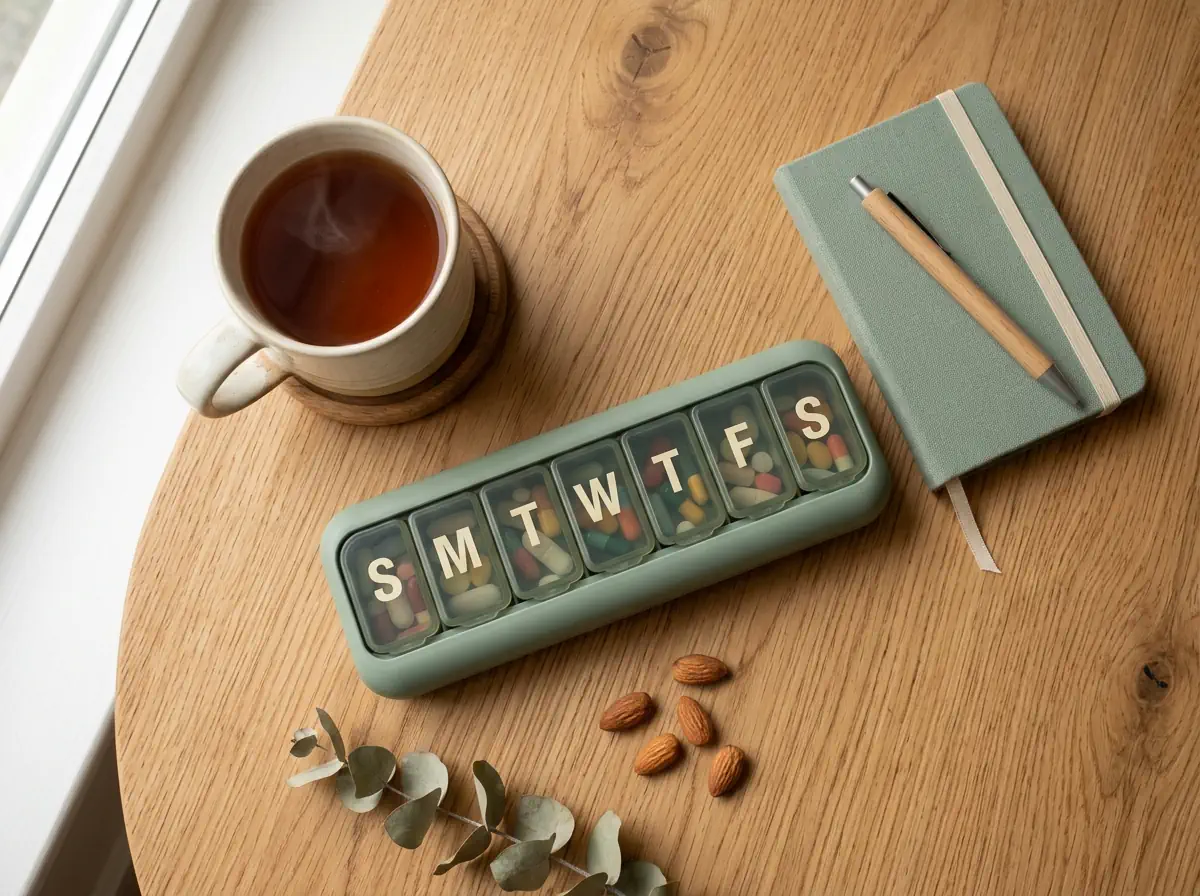
💊 Any approved rescue medication, alongside your regular medications and a weekly pill organiser if brain fog makes tracking difficult mid-flare.
🧦 Comfort textures. Soft socks, a weighted or textured blanket, a favourite wrap — sensory comfort genuinely helps regulate an overwhelmed nervous system, and there's no age at which that stops being useful.
🧴 Wipes and hand sanitiser, for freshening up without a shower and for reducing infection risk if your immune system is a factor.
💋 Lip balm and hand cream — small, but frequently mentioned, especially if medications cause dryness.
🧘 For the mind, not just the body
A flare is rarely only physical. A short list, prepared in advance, of familiar shows, podcasts or playlists that require minimal concentration tends to work better than searching for something new when your brain is already working overtime. Noise-cancelling headphones or an eye mask can help if sensory overload is part of your flare pattern. Some people keep a small notebook nearby too — not for productivity, but as a place to note what's happening, without needing to hold it all in your head.
💬 A grounding phrase is a legitimate kit item
Therapists who work with chronic illness patients recommend having one short phrase ready for the moment self-blame creeps in — something as simple as "my body is working hard, and I deserve support right now." It won't reduce the pain, but it can interrupt the shame spiral long enough to bring you back to just getting through the day, which is the actual goal.
🎯 Make it specific to your body
A generic list is a starting point, not a finished kit. If temperature regulation is part of your condition, a slightly cool room plus warm socks may matter more than anything else on this list. If you use a stoma or have specific mobility needs, your own must-haves — spare supplies, particular aids — belong in there too, even if they're not on anyone else's list. The best kit is the one built around your actual flares, not someone else's.
The fastest way to get there is to write down what helped, the day after each flare, while you still remember. Four flares in, that record is worth more than any list on the internet — including this one.
💚 Building this kit is not admitting defeat
Preparing for a bad day isn't pessimism — it's respect for the fact that bad days happen, and that future-you deserves to not be scrambling when one arrives. That's not giving up. That's planning ahead for yourself the way you would for someone you love.
❓ Frequently asked questions
What's the difference between a flare kit and a hospital go-bag?
Where should I keep my flare kit?
Do I need to buy everything for a flare kit at once?
How do I stop the kit running empty?
🛒 STILL WANT THE CHECKLIST?
Three pages, undated, in both A4 and US Letter — build the cart, write your flare plan, and restock without thinking about it.
📚 Sources & further reading
The information in this article is drawn from the following sources. We encourage you to explore them.
The Mighty — 24 Things to Put in Your Chronic Illness 'Crisis Kit'
Anam Cara Counseling — Your Chronic Illness Flare Up Toolkit
Lupus Trust UK — Flare Day Comfort Kit
Continue reading
⚕️ This article is for general organisational and informational purposes and is not medical advice. If a flare includes severe or unusual symptoms, seek prompt medical attention rather than relying on home management alone.